Choose Your Discounted Glyco Barrier Package With Our Special Time-Limited Offer!
-
 Glyco Barrier Bottles Remaining: 218

Enjoy FREE SHIPPING on 3 and 6-Bottle Orders!
*For long-term results, we recommend choosing the 6 bottle option
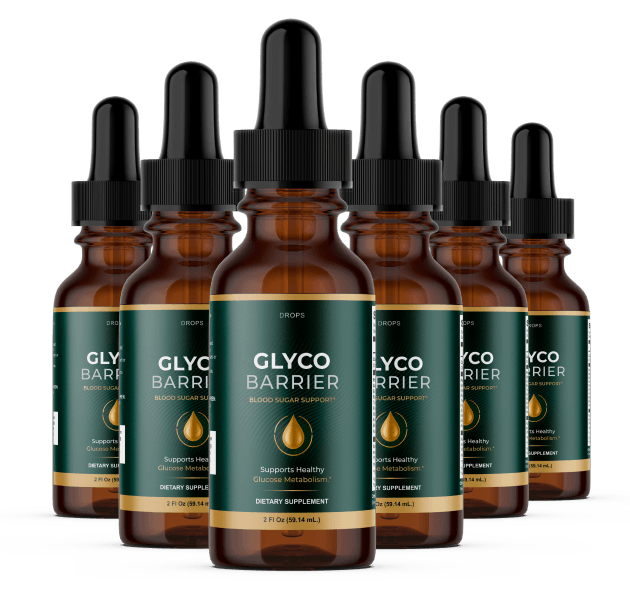

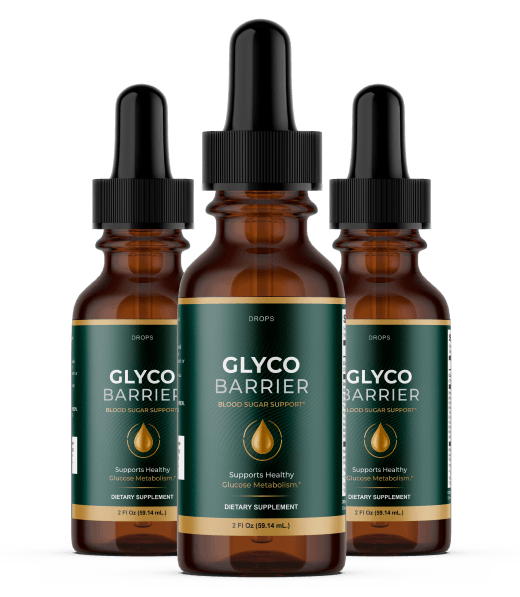

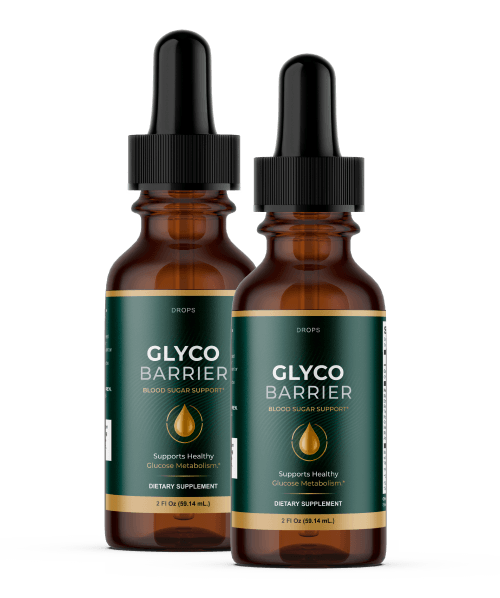

100% Satisfaction or Your
Money Back
60-Day Unconditional Guarantee
If for any reason within 60 days you're not satisfied with the product, just send an email and we'll immediately buy back all the bottles from you at the same price you paid — no questions asked and no hassles.
Simply return the unused bottles, and we’ll buy them all back — even if they’re damaged. No questions asked — it’s an unconditional guarantee! That’s how confident we are in Glyco Barrier.
And if you choose the 6-bottle package, your guarantee becomes even more powerful:
You’ll be automatically covered by our 60-Day guarantee — meaning you can ask for your money back at any time in the future, if you’re not completely satisfied.
So, click below and order your Glyco Barrier kit today, completely risk-free. We guarantee your results with our own money — for life.




Transform Your Body Faster With Our 3 Or 6 Month Glyco Barrier Package
What People Are Saying About Glyco Barrier?
Real Life-Changing Results!
Top reviews from the United States

Linda M. – Montclair, NJ
Glyco Barrier saved my life

Last Sunday, my 6-year-old granddaughter asked me to join her for a walk in the park. Her smile brought me to tears because, for the first time in years, I could walk beside her without worrying about my blood sugar crashing. Without Glyco Barrier, I’m sure this wouldn’t have been possible. Before taking it, I couldn’t even make it down my driveway without exhaustion and burning feet stopping me.
26 people found this helpful
Helpful
Report
Karen R. – Boulder, CO
I Feel Like Myself Again!

Five months ago, my daughter wouldn’t let me go to the grocery store alone. She always said it was “too dangerous” and that I might faint or lose control of my sugar levels. But now, thanks to Glyco Barrier, I’m going to the market by myself, doing chores at home, and even going to church every Sunday. I’m no longer reliant on anyone!
21 people found this helpful
Helpful
Report
Michel W. – Seattle, WA
I Thought Diabetes Would Control Me Forever

After I turned 60, the blurry vision and burning in my feet got so bad I could barely sleep. Thank God my doctor had heard of GlycoBarrier. He told me to take it every day, and I did so religiously because I couldn’t bear the thought of losing my independence completely. After two months of taking GlycoBarrier, I can proudly say the tingling is gone, my sugar is stable, and I feel free again.
19 people found this helpful
Helpful
Report
Barbara B. – Charleston, SC
The Best Support I’ve Tried

Do you know how it feels to grow more limited and frustrated with each passing day? I lived like that for over eight years. That’s why I thank God every single day for finding Glycobarrier. Now I no longer struggle with constant sugar spikes, restless nights, or the fear that my health would never get better.
19 people found this helpful
Helpful
Report
Emily B. – Brookline, MA
A Game-Changer for My Health

I used to sit silently at family dinners, terrified to eat because I’d feel dizzy or spike in front of everyone. The shame and fear were unbearable — I’ll never forget it. But after discovering GlycoBarrier, everything changed. Just last week, I stood up and danced with my husband at our grandson’s birthday party. I went from being the one everyone worried about to being the one inspiring hope — a miracle I never thought possible.
21 people found this helpful
Helpful
Report
Choose Your Discounted Glyco Barrier Package With Our Special Time-Limited Offer!
-
Glyco Barrier Bottles Remaining: 218
Enjoy FREE SHIPPING on 3 and 6-Bottle Orders!
*For long-term results, we recommend choosing the 6 bottle option
Frequently Asked Questions
Absolutely. Glyco Barrier is made with 100% natural, plant-based
ingredients, blended in clinically precise doses. It’s manufactured in a
U.S.–based, FDA-verified lab that follows strict safety and quality
regulations. Still, if you have any medical conditions or are taking
medications, it’s always a good idea to consult your healthcare provider
before starting.
Some users notice improvements in energy, fewer sugar spikes, and
reduced burning feet within the first few days. Noticeable improvements
in blood sugar control often begin within the first week, and many
people report significant progress within the first 10 days. For
long-lasting results and full blood sugar stabilization, the full
6-month treatment is strongly recommended.
No. Glyco Barrier is only sold on this page, through the official website.
Buying elsewhere may expose you to counterfeit or expired products.
Always purchase directly here to ensure authenticity and guarantee
coverage.
Not at all. Glyco Barrier was designed for people who want to reverse type 2
diabetes naturally without complicated routines. The formula works even
if you continue with your normal lifestyle. Of course, healthy habits
may enhance your results, but they’re not required.
That’s totally fine. Glyco Barrier works for men and women of all ages,
including those over 60, 70, or even 80. Many older users report
stabilized blood sugar, improved energy, and reduced diabetic discomfort
— even after years of struggling. The formula is gentle yet powerful,
regardless of age or stage.
In general, yes. But since Glyco Barrier already contains a complete,
clinically tested blend for blood sugar and pancreatic support, we
recommend checking with your doctor if you’re taking similar products —
to avoid overlap or excessive intake.
To unlock permanent results, we recommend the 6-bottle package. That’s
the ideal duration to allow your body to eliminate the sticky pancreatic
sludge, restore the GLP-1 pathway, and stabilize blood sugar long-term —
maintaining the results even after you stop taking it. Plus, you’ll get
exclusive bonuses and free shipping when you order today.
Yes — as long as you complete the full 6-month treatment. Glyco Barrier is
formulated to help you maintain your results and protect your body from
future blood sugar complications.
We’re so confident in Glyco Barrier that we offer a 60-day money-back
guarantee. If you're not completely satisfied — even after finishing the
full treatment — just send us an email and we’ll refund every penny. And
yes, you keep the bottles as a thank-you for giving it a try.
Most Glyco Barrier orders are processed within 1–2 business days. Shipping typically takes 3–5 business days to the U.S., Canada, the U.K., and Australia. Orders that include the 6-bottle package receive priority fulfillment for faster delivery.
Each morning, simply take 1 capsule of Glyco Barrier with a glass of water
before breakfast for optimal absorption and maximum blood
sugar–balancing and GLP-1–supporting effect. That’s it — no mixing, no
prepping, no hassle. Just stay consistent and let the formula do the
work for you.
Who Is Dr. William Li?

Who Is Dr. William Li?
Dr. Li is a Harvard-trained internal medicine physician, metabolic researcher, President of the Angiogenesis Foundation, and #1 New York Times bestselling author of Eat to Beat Disease. With over 30 years of medical research, more than 40 medical innovations developed under his leadership, and millions of followers worldwide, he is internationally recognized for his groundbreaking work in metabolic health and disease reversal.
During his research at Harvard Medical School, Dr. Li uncovered the hidden root cause of type 2 diabetes — a toxic buildup he calls pancreatic sludge, formed by environmental chemicals that suffocate insulin-producing cells and disrupt natural GLP-1 production. His discovery led to the development of Glyco Barrier, a scientifically formulated blend designed to dissolve pancreatic sludge, restore the body’s natural GLP-1 levels, and reactivate healthy blood sugar regulation.
100% Satisfaction or Your
Money Back
60-Day Unconditional Guarantee
If for any reason within 60 days you're not satisfied with the product, just send an email and we'll immediately buy back all the bottles from you at the same price you paid — no questions asked and no hassles.
Simply return the unused bottles, and we’ll buy them all back — even if they’re damaged. No questions asked — it’s an unconditional guarantee! That’s how confident we are in Glyco Barrier.
And if you choose the 6-bottle package, your guarantee becomes even more powerful:
You’ll be automatically covered by our 60-Day guarantee — meaning you can ask for your money back at any time in the future, if you’re not completely satisfied.
So, click below and order your Glyco Barrier kit today, completely risk-free. We guarantee your results with our own money — for life.
Hurry! Limited Stock Available – Secure Your Glyco Barrier Package at 50% Off Today!
-
Glyco Barrier Bottles Remaining: 218
Enjoy FREE SHIPPING on 3 and 6-Bottle Orders!
*For long-term results, we recommend choosing the 6 bottle option
4.321 comments
My doctor couldn’t believe it. After just 10 days, my A1C dropped so much he thought the lab messed up. He even made me redo the test just to be sure and said he’s never seen anything work this fast.
Same here! My doc thought the machine glitched... This stuff is wild.
I’ve been doing this trick for a little over a week, and my blood sugar levels have gone from 210 to 110. It feels like I can breathe again. Thank you for helping people without asking for anything in return
My fasting glucose used to be 280. After just 14 days, it’s down to 100. I haven’t felt this hopeful in years. 🙏
That’s awesome, Lucy! Did you make any other changes besides the recipe?
Nope, just the recipe. I didn’t even mess with my diet much. It’s crazy how something so simple is working so well.